
Small steps towards healthier food
At this year’s Young IFFI Event, one of the key topics is the National Approach to Product Improvement (NAPV). The idea behind this initiative is simple: put healthier products on supermarket shelves. That means food with less sugar, salt, and saturated fat and more fiber. But while the concept sounds straightforward, reality tells a different story. Vera Hoynck van Papendrecht, Program Manager Healthier Food at Foodvalley and one of the event’s speakers, explains why making our food supply healthier is anything but easy.
Mapping the Challenges
The Ministry of Health, Welfare and Sport has asked Foodvalley to help move towards a healthier food landscape. Before diving in, Foodvalley wanted to understand what was already happening in terms of reformulation.
“Technically, there’s a lot that can be done,” says Vera. “But in practice, it doesn’t always happen. We wanted to find out why.” After talking to nearly 100 people across the entire food chain, six collective barriers emerged and together, they show just how complex the shift towards healthier food really is.
Old Habits, New Products
One of the biggest hurdles? Consumers themselves. People are creatures of habit, and when it comes to food, taste and price are often the deciding factors. “Consumers don’t want to compromise on things like flavour or shelf life,” Vera notes. Innovation is another stumbling block. Small companies don’t always have the R&D capacity to experiment, while larger companies often cut budgets in this area. And even when innovation is possible, it’s expensive: from the development phase right through to promotion.
There’s also hesitation in the industry: new techniques and ingredients are available, but are sometimes reluctant to use them due to the costs of retooling production processes or adapting factories, both a major investment. They are also afraid of how retailers or consumers might react. Consumer could switch to another brand, that is not taking the same measures. On top of that, legislation should be more supportive. “A level playing field only exists when everyone is obliged to take part,” says Vera. “Right now, companies are nervous about taking the lead.”
For start-ups, scaling up production is often the hardest part, meaning their innovative products rarely make it to the mass market.
Building a Community
Foodvalley can’t remove these barriers on its own, but it does want to create a community where stakeholders share knowledge and take steps together. “We connect potential partners, and we involve them in several projects that promote healthier eating,” Vera explains.
One example is a local initiative where young people are encouraged to make healthier choices. “We make their environment healthier by increasing the availability of better options. Not just the strictly healthy choices, because it’s important to stay close to their preferences and habits, but by creating a balance where healthier options become more appealing.”
Practical Tools
To support producers, Foodalley also offers a Reformulation Guide on its website. It gives an overview of nutritional aspects of sugar, salt, saturated fat and fibers, and sets out their sensory and technological implications in food products. For increasing understanding and accelerate reformulation strategies and processes. It also provides practical examples and points food manufacturers to suppliers that can help with reformulation.
Change Takes Time
The transition towards healthier eating is a slow one. And that’s understandable, given the number of obstacles along the way. Still, Vera sees plenty of positive energy among the companies involved. “There’s a lot of enthusiasm in our community,” she says. “Progress may not be as fast as we’d like, but you can’t adjust too many ingredients at once, otherwise you end up with a completely different product.”
Why It Matters
The urgency is clear: almost half of the Dutch population is overweight, a number that’s likely to rise in the future. Unhealthy diets contribute to a wide range of health problems and higher healthcare costs. Processed foods play a major role here. “That’s why it’s so important to focus on the opportunities,” Vera concludes. “The process isn’t always easy, but every small step counts. By working together, sharing knowledge, and supporting each other, we can keep moving towards healthier choices.”
More info: foodvalley.nl
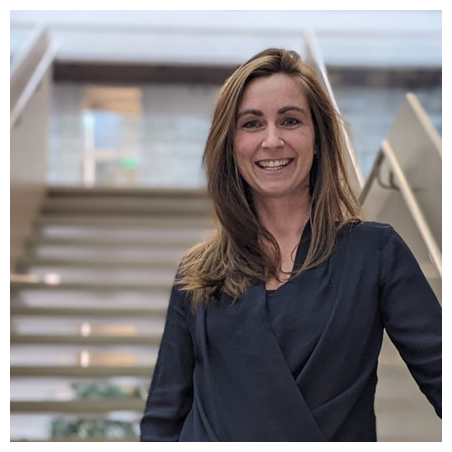
Vera Hoynk van Papendrecht
Program Manager Healthier Food at Foodvalley