
Gregory Sedoc on performance, pressure and purpose
Former top athlete Gregory Sedoc knows better than anyone what it takes to perform at the highest level. As a three-time Olympian and European champion in the 60 metres hurdles, he delivered top performances, even under intense pressure. During the Young IFFI event on May 19, he will take his audience through the highs and lows of his career, life after elite sport, and the importance of setting clear goals. He will also address the role of nutrition and how it contributes to (mental) fitness and vitality. “Without a clear goal, you don’t know what you’re working towards.”
Sedoc (October 16, 1981, Amsterdam) started athletics at the age of six, following in his father’s footsteps. Initially, long jump seemed to be his discipline, but after several injuries he switched to hurdles, with great success. He qualified for the Olympic Games three times and became European Champion in 2007. In 2009, he set the Dutch national record in the 60 metres hurdles.
When did you realize you could reach the top in athletics?
“It’s difficult to point to one specific moment, because that realization grows gradually. But in 2002, when I qualified for the European Championships at the age of twenty, I did feel like I could make it to the top. At the time, I was still part of the Dutch junior team. You often see athletes perform well at that level, but only at senior level can you really tell if someone breaks through. I didn’t become European Champion until I was 25, while others might peak earlier. But it did allow me to stay at the top for a long time: I competed at the highest level for eighteen years.”
How did you maintain confidence until that European title?
“You build confidence through progress and results. If you have to work harder and harder for the same results, people often respond by pushing themselves even more, which can lead to overtraining and injuries.”
What was the biggest sacrifice you had to make to become a top athlete?
“To be honest, it never really felt like a sacrifice. This was my dream. I wanted nothing more than to compete and travel the world. The only thing I regret is missing my father’s fiftieth birthday.”
Elite sport is all about marginal gains. Which small habit made the biggest difference for you?
“For me, rhythm was everything. You hear that from many former athletes, they miss the structure: waking up early, eating, training, resting. I noticed it myself when I became a bit more relaxed later in my career. I got into a relationship, we moved in together, and life became less structured: you eat differently, go to more social events. But for performance, it’s best when everything supports that rhythm. You want to stay in that flow, because that’s how you maintain focus and perform at your best.”
You were suspended from competition for a year. What impact did that have mentally?
“That period came at a high mental cost. The suspension felt very unfair. I spent a year in the United States and pushed myself to the limit to qualify for the London Olympics. Everything had to give. It was a real struggle, and in hindsight I paid a heavy price. I got injured during the Games, and afterwards I fell into a depression. I never took the time to recover properly or reflect on what I needed: rest, or talking things through with someone. Maybe it would have been better to take a step back first, so I could come back stronger.”
Many people would quit after that. What made you continue?
“I wanted to go on for another four years, because the European Championships would be held in Amsterdam in 2016. I wanted to finish my career there, not somewhere on a random track. Those weren’t my best years, I didn’t really reach my old level again. But I kept going, and it paid off. I was able to finish in a packed Olympic stadium which was incredible.”
Looking back, are you more proud of your achievements or your perseverance?
“They go hand in hand, of course, but I’m most proud of my perseverance. Without it, I wouldn’t have achieved what I did. That was already the case in school. I was the only one in my class going to a lower-level secondary track, while others went higher. But I pushed through and earned my diplomas. In athletics, too, not everyone believed in me.”
Nutrition is almost as important as training in elite sport. How important was it for your performance?
“I always made sure I ate enough. Many athletes undereat and lose weight, but in power-based events, muscle mass is important. I adjusted my nutrition based on the training I had to do and the conditions. If I was doing strength training, I ate more protein. In the U.S., I became even more aware of it. Training sessions there are much longer: you’re busy all day. That means you need to bring food and make sure you can sustain your energy. I used to get by on a couple of slices of bread, a banana and tea, but that was no longer enough. Nowadays, there’s much more knowledge about nutrition, and diets are fully optimized. That knowledge simply wasn’t as available back then.”
After your career, you were diagnosed with Crohn’s disease. How do you manage that?
“My condition shows up in high inflammation levels. So I’ve cut certain things from my diet, like meat. I have to make sure I get enough protein and fiber. I don’t suffer from obvious symptoms like diarrhea, which actually makes it more dangerous because you don’t notice it. During my career, I didn’t know I had this condition. If I had known, it would have made a big difference: I would have performed better. I was constantly dealing with injuries because of the inflammation. In 2012, I visited an orthomolecular therapist because of my depression, and he told me my gut was ‘on fire.’ I already had Crohn’s at that point, but didn’t know it. Since then, I’ve received treatment. Recently, I had a stent placed in my intestine, and that made a big difference. I have much more energy now and feel much better.”
You now present Sportlab Sedoc and work as an analyst. What fascinates you most about science and data in elite sport?
“If you don’t innovate in sport, whether it’s nutrition, clothing or technique, you fall behind. When I moved to Germany, I was introduced to testing and data analysis for the first time. I found it fascinating, because small adjustments can make a huge difference. That applies not only to sport, but also to your health.”
Which elite sports mindset should every young professional adopt?
“Aim for the highest possible standard, that’s the most important thing. Don’t settle for average. A top athlete always goes for the win, not second place. I tell my son the same: aim for a ten, not a six, at least then you’ll end up in a good place.”
How do you stay mentally and physically resilient under pressure?
“Speak up in time when you’re struggling. That way, the people around you know what’s going on; whether they should give you space or help take work off your hands.”
If people take away one lesson from your story, what should it be?
“Goals are essential. If you don’t have a clear goal, you don’t know what you’re working for.”
More info about the Young IFFI Event here.
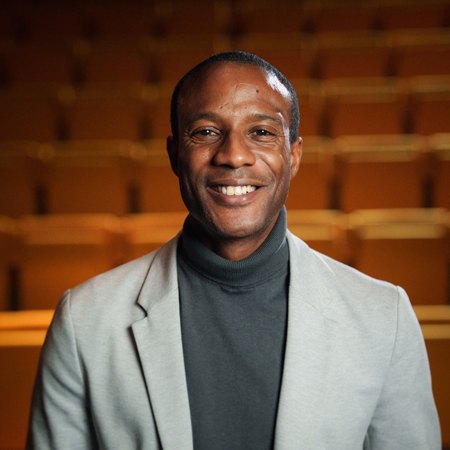
Gregory Sedoc
Former ahtlete