Where science meets flavour
Culinology bridges the gap between the kitchen and the laboratory
Why does a supermarket ready meal never taste quite like a homemade one? Why can a plant-based burger be technically perfect, yet still seem to be missing something? And how do you ensure that a product is not only safe, shelf-stable, healthy, sustainable and affordable, but above all tastes good?
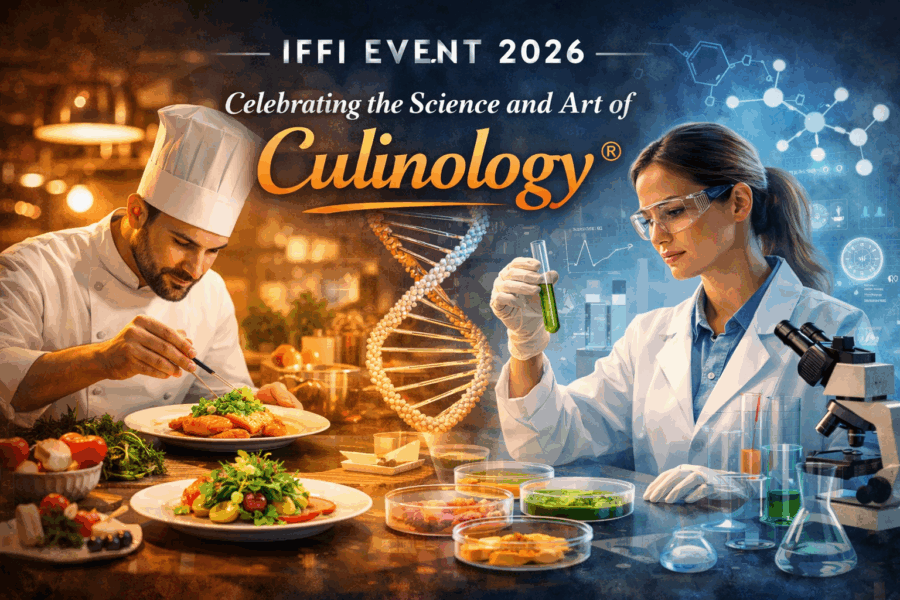
These are precisely the kinds of questions Culinology® seeks to answer. The discipline brings together culinary creativity and food science to develop better products. On 17 September, Culinology will take centre stage at an anniversary event organised by IFFI and the Research Chefs Association (RCA), which is celebrating its 30th anniversary this year.
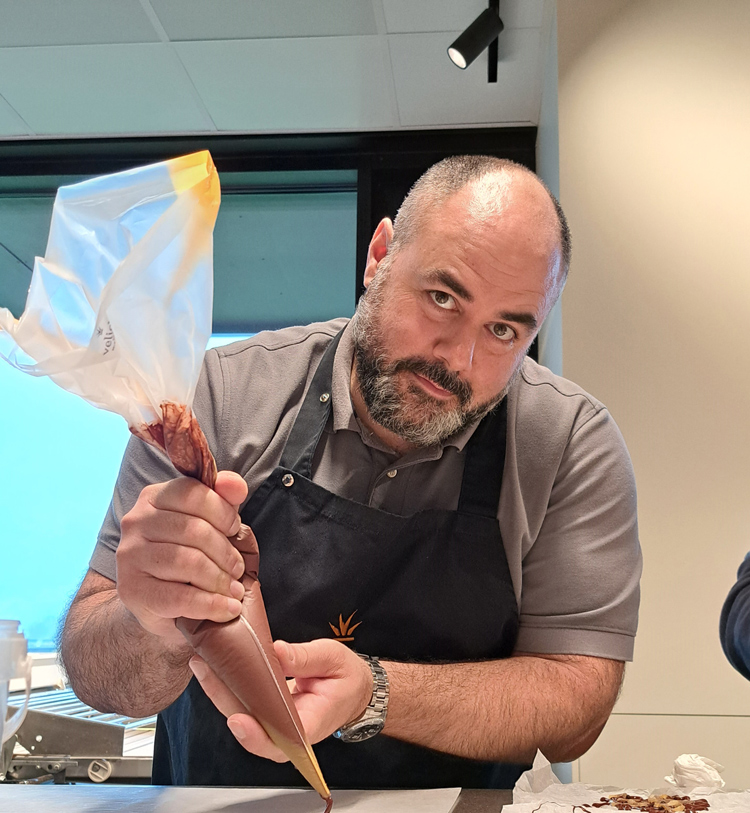
According to Dimitris Lykomitros, Food Scientist at Cargill, Chair of RCA Europe and one of the event’s initiators, this collaboration is a natural one. “How can you develop food products if you know nothing about cooking? And how can you scale up a product if you do not understand the science? It makes perfect sense to bring these two worlds together.”
Yet according to Lykomitros, this is still far from common practice. Many educational programmes continue to focus primarily on either the culinary or the scientific side of food, even though combining the two leads to better products.
Taste is king
No matter how advanced an ingredient or production technique may be, the consumer ultimately decides. “Taste is king,” says Lykomitros. “In an industrial environment, the focus is often on functionality, production processes and scaling up. As a result, the culinary aspect can sometimes fade into the background.”
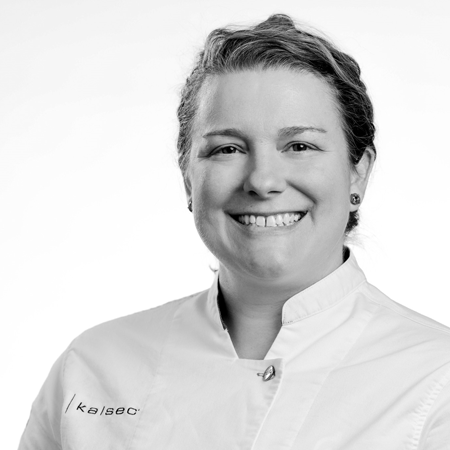
Anna Cheely, Senior Culinary Innovation Manager at Kalsec and Vice President of the Research Chefs Association, has observed the same thing. She describes herself as “a product developer with the knowledge of a chef”. Every day, she works with scientists, marketers, product specialists and culinary experts to develop new products. “Product development really is a team effort,” she explains. “Taste is not the only important factor. Colour, texture, shelf life, price and consumer preferences all matter too.”
According to Cheely, this multidisciplinary approach is Culinology’s greatest strength. Over the past 30 years, the Research Chefs Association has played an important role in promoting it. “RCA is a platform where people share knowledge. That is quite remarkable, because in some ways we are competitors. Yet collaboration is at the heart of what we do. Ultimately, we all want to help move the food industry forward.”
More than chemistry
Anyone who thinks flavour is determined solely by chemical composition underestimates the complexity of the eating experience. Cheely works extensively with sensory science. One current example is the way consumers perceive heat and pungency. “We can measure the amount of capsaicin in a chilli pepper very precisely. Yet that scientific measurement does not always correspond with what consumers experience.”
This is because flavour involves much more than chemistry alone. Aroma, texture, temperature, colour and even the context in which something is eaten all influence the final experience. It was this fascination with the interaction between science and human perception that eventually led José Guerrero from the restaurant kitchen to the laboratory.
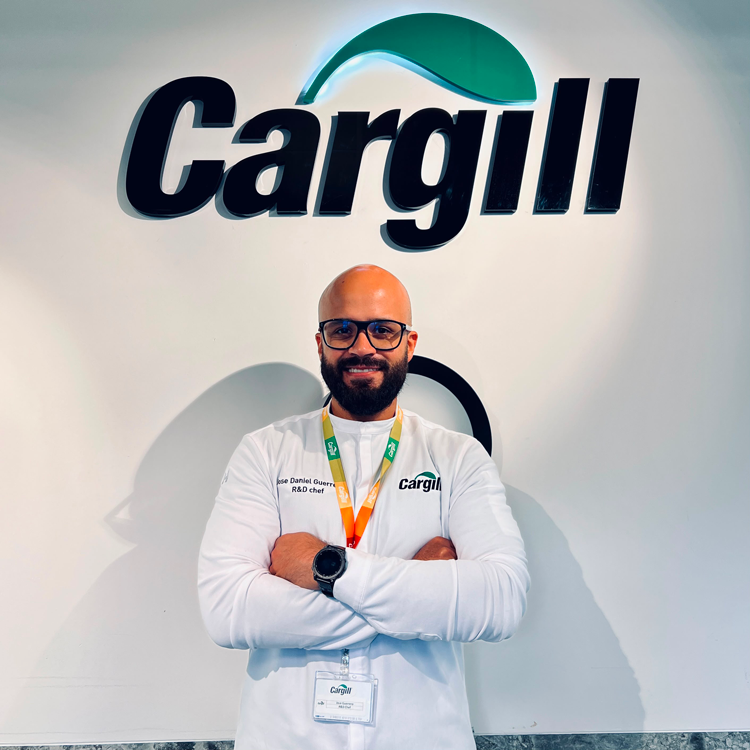
Guerrero spent many years working as a chef in Michelin-starred restaurants. Today, as R&D Chef EMEA at Cargill, he develops products that will ultimately be eaten by millions of consumers. “My curiosity brought me here,” he says. “I want to understand everything about food, including the science behind it.”
According to Guerrero, chefs and scientists quite literally speak different languages. “They think differently, work differently and look at food differently. But when you understand both worlds, you can push the boundaries of innovation.”
From restaurant to supermarket
Guerrero’s decision to move into the food industry was a deliberate one. “In a Michelin-starred restaurant, even the most beautiful dishes reach only a very small audience. Everyone goes to the supermarket. If you develop a good product for that environment, you can reach millions of people.”
To make this transition, he studied food science at the Basque Culinary Center. “I wanted to understand why a soup has a long shelf life or why a sauce has a particular texture. As a chef, I could not explain those things.”
According to Guerrero, knowledge forms the basis of creativity. “If you understand how flavour is constructed, you can innovate in a much more targeted way. Only when you know which building blocks create a strawberry flavour, or why meat browns during grilling, can you begin to control those processes.”
Practice is the ultimate test
Nevertheless, Guerrero believes that practical experience is at least as important as theory. Every day, he sees how chefs and scientists can complement one another. “In a laboratory, people work very precisely with standardised recipes. But sometimes, there simply is not enough tasting.”
A chef automatically considers how consumers will actually use a product. “If you are developing a tomato sauce, you know that people will probably use it for pasta or lasagne. They may leave it on the stove slightly too long because they are doing something else at the same time. If the sauce then fails, they will not blame themselves; they will blame the product. You need to take that into account during development.”
Culinary experience is also indispensable when developing new flavours. “Over the years, chefs build up an enormous flavour library. By tasting carefully, they can often identify which ingredients a product contains. That intuition is incredibly valuable.”
Remaining curious
All three speakers believe that the future of Culinology lies in connecting different disciplines. New generations of professionals are increasingly learning both culinary skills and food science. Technologies such as artificial intelligence will also play a growing role.
But regardless of which new techniques emerge, curiosity will remain the most important quality. “Creativity does not simply appear,” says Guerrero. “It is not magic. It begins with knowledge. You need to travel, taste, read, talk to people and keep learning. Only then can you truly innovate.”
This perfectly captures what Culinology is all about: the better we understand food, the better equipped we are to develop products that are not only technically sound, but that consumers genuinely want to eat.
Published in EVMI magazine, no.5, 2026