
Rethinking the Future of Food
Jan Buining has spent his entire career in the food industry. Around fifteen years ago, he began to question more seriously what the industry was actually producing. Price, convenience and taste tend to take precedence, he argues, while health was not part of the equation at all. To offer an alternative, he developed TastyBasics, a range of foods made with as many whole, minimally processed ingredients as possible. He also wrote ‘De Onhoudbare Houdgreep’ (The Unsustainable Grip), in which he calls for fundamental change to the food system. On 8 October, he will discuss his ideas at the Young IFFI Event.
The turning point began with his own lifestyle. Buining exercised regularly, watched what he ate and believed he was making healthy choices. A lecture by Hanno Pijl, Professor of Diabetology and a practising internist-endocrinologist, made him question that assumption. Buining subsequently delved into a range of scientific publications and discovered that eating healthily required more effort than he had realised.
Convenient
“Many foods are designed to be affordable, convenient, long-lasting and, above all, tasty,” Buining says. “In the process, raw materials are broken down into separate components and then recombined. Valuable nutrients are lost, while ingredients such as sugar, fat and starch are added in concentrated forms. The result is food that provides plenty of energy but relatively little fibre and few other essential nutrients.”
Different approach
Through TastyBasics, Buining wants to provide a counterweight and demonstrate that a different approach is possible. The range includes muesli, crackers, bars and pasta made with as many whole ingredients as possible, including whole nuts, seeds, kernels and pulses. This helps to preserve the natural balance of carbohydrates, fats, proteins, fibre and micronutrients.
Red ocean
Pursuing a different course is far from easy. “Running a business in the food industry is like swimming in a ‘red ocean’: companies compete fiercely on price, convenience and taste and can hardly escape that battle. Those that make different choices risk losing market share. This makes it difficult for individual companies to change course on their own.” In this competitive model, long-term health is not a primary consideration.
Tipping point
According to Buining, genuine transformation requires action from every party involved. Producers are not the only ones that need to move; governments, advertisers, retailers and consumers all have a part to play. Once enough parties begin to act, a tipping point can be reached and change can spread throughout the food system.
Margins
He also believes that the way prices and distribution margins are calculated deserves attention. “Products made on a smaller scale are generally more expensive to begin with. When every link in the chain then adds its usual margin in percentage, the price gap with conventional products widens further. As a result, the healthier choice remains the more expensive one.”
Little faith
He has little faith in government action that focuses primarily on banning products or imposing requirements on manufacturers. “I see more value in an approach that helps producers and consumers make different choices, for example by making the long-term health effects of food more visible.”
Need of change
Nevertheless, he believes awareness of the need for change is growing. Manufacturers are reducing sugar and salt and adding fibre. These are valuable steps, but progress is slow and, according to Buining, the industry may not always be choosing the most effective route. Is adding isolated fibre to a product enough, for instance, or would it be better to encourage people to eat foods that are naturally rich in fibre?
Whole food
That question reflects a deeper way of thinking within the food industry. “Influenced by medical science, we have increasingly started to dissect food: what does sodium do in the body, what effect does a particular type of fibre have and what does one vitamin contribute? We then extract these individual building blocks from raw materials and add them to other products. In doing so, we risk overlooking the complexity of food and the way the body processes a whole food.”
Transformation
He developed his ideas further in ‘De Onhoudbare Houdgreep’. In the book, he examines how today’s food supply came about and what is needed to change it. Hanno Pijl and transition expert André Nijhof also contribute their perspectives. According to Buining, the solution does not lie with a single party or measure, but in transforming the system as a whole.
Different perspective
At the Young IFFI Event, Buining will address an audience of young professionals from the food ingredients industry. His aim is not to convince them that he is right, but to challenge them to look at their profession and the industry from a different perspective. Nor does he see any reason for despair. The ingredients industry, in particular, has opportunities to help create foods with greater nutritional value. “Large companies and cooperatives are already discussing a different course at boardroom level, even if they do not always do so publicly. Companies that start seriously exploring alternative approaches now can build a competitive advantage.”
First steps
For Buining, there is no doubt that the food system will ultimately have to change. The main question is which parties are prepared to take the first steps.
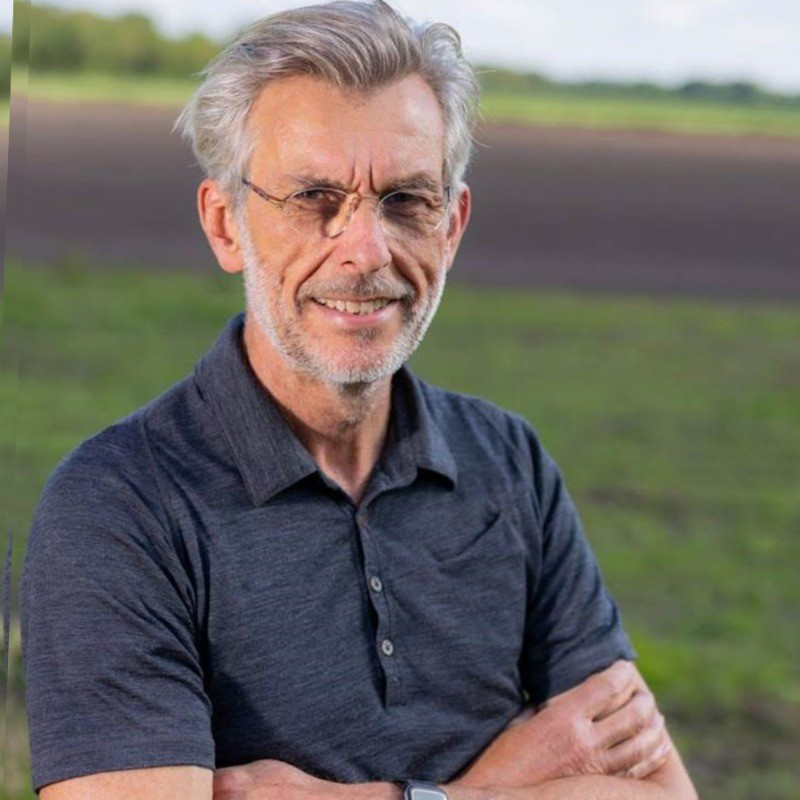
Jan Buining
Food professional, founder of TastyBasics